Wine with Risotto

One of the things I love about risottos is that (like curries) there are so many different ways to make and flavor risotto.  My wife also has a method for making risotto now using the Thermomix, that produces a great risotto in 20 minutes instead of the hour it was taking before, using more traditional methods.

While this is not a blog on making risotto, I am going to take a minute to cover off making risotto the traditional way versus using the Thermomix as I did not believe risotto made in a Thermomix could be nearly as good, but it is.  It did take her several trials to get it right in terms of exact timing and amount of ingredients to put in and some risottos work better in the Thermomix than others.  However, for the working couple who does not have the time upon returning home from work later in the evening, using the Thermomix to prepare a mid-week risotto meal is a real treat!

You can look to my bride’s blog “DAZ in the Kitchen” to find out more on her risotto recipes and making them the traditional way and with the Thermomix.  Now back to the question of “which wine goes best with which risotto?”

One of the basic principles I try to follow when selecting a wine to go with food is to ensure that the wine and food are “in balance.”

What does this mean?  For me, it means that neither the food nor the wine overpowers the other nor minimizes the other’s role in the meal.  If food is smooth or creamy, then the wine (usually) should be also; if the food is more gritty (like lasagna), then the wine should be more gritty (have more tannins, be unfiltered, etc.) like the 2006 St Peter’s Shiraz I recently had with a good meat lasagna;  if the food is complex with many ingredients, the wine should be complex (usually this means more time in the bottle); if the wine has some sharp tastes (sometimes with fish or seafood for example), then the wine should have a bit of an edge to it also.  There are entire books written on this subject, but hopefully you get the idea.

Risotto becomes creamier in texture as it is cooked and creates a bit of sauce to go with it.  We often make a chicken and mushroom risotto using white chicken meat and button mushrooms.  I have found that a medium-bodied Chardonnay goes well with it.  I would recommend something like the 2009 or 2011 Two Rivers Reserve Chardonnay.  While there are certainly many different Chardonnays in this category that would work, the Two Rivers is simply one of the very best Chardonnays you can get for the money.  I would recommend it over all others for this type of risotto.

But if the risotto is made with a combination of white and dark chicken meat or dark meat only and you are using multiple types of mushrooms, such as portabella and shiitake, or you are mixing in a bit of truffle oil, then I would use a more aged and complex Chardonnay.  Chardonnays in this league would include the Penfold’s Yattarna, the 2000 Waverly Estate Chardonnay, or even a Puligny or Chassagne Montrachet.  But note these wines are three to ten time more expensive than the Two Rivers, which would still go very nicely with a more complex chicken and mushroom risotto!

Last night I tried the 2009 Pepper Tree Pinot Gris with the chicken and mushroom risotto and it did not match as well as the Chardonnays I have had with the dish previously, but I believe it was the particular Pinot Gris.  I think a true Italian Pinot Gris such as the 2010 Jermann (which is a far better Pinot Grigio on its own!) would have matched beautifully as it is a bit smoother, yet much more intense and flavorful than the Pepper Tree.

However, the Pepper Tree, being a bit more bland and metallic, would have gone very nicely with a (non-spicy) pumpkin risotto, which is something I plan to verify the next time we make a pumpkin risotto.

My bride also makes a magnificent prawn and gorgonzola cheese risotto, with both the prawn and cheese bringing out a more metallic and sharper taste than the chicken and mushroom risotto.  Therefore, I match up a nice Riesling with that risotto.  I would recommend the 2009 Hugel Alsace Riesling or any good Riesling from the Clare or Eden Valley in South Australia.  There are so many good Rieslings in the $15 – $30 range that would go well with the prawn and gorgonzola risotto.

The important thing again is “balance”.  Had I matched the Riesling with the chicken and mushroom risotto, the Riesling would have overwhelmed the risotto and had I matched the Chardonnay with the prawn and gorgonzola risotta, the wine would have been overpowered by the food.

When eating and drinking wine, if either the food or wine is dominant, then you have made a poor choice in the matching, but if both are in balance and blending nicely together, then you have made good choice.  And if they are competing back and forth without either one winning, then you have made the perfect choice!

The Many Faces of Semillon – Part 2: Museum-Released and Aged Semillons

In my post entitled Overview of Australia’s Wine Regions – Part 3 where I described the Characteristics and Grapes of Australia’s Larger Wine Regions, I extol the unique and symbiotic relationship between The Hunter Valley and the Semillon grape.
 
Hunter Semillons are un-paralled anywhere in the world.  A multitude of Hunter wineries make great, great Semillons, in three styles which really relate to their age in the bottle and when they are released.  They are:

  • Crisp, new Semillons a year or two in the bottle
  • Semillons stored for 5 years before being released
  • “Museum” Semillons being bottled and stored 10 years before being released 

The discussion of young and medium-aged Semillons is covered in the previous post “The Many Faces of Semillon:  Part 1 – Young and Medium-Aged Semillons”.  In Part 2, we will now discuss the beauty of Museum-Released and Aged Semillons.

While I like my young and medium-aged Semillons, “museum-released” and aged (10 years or older) Semillons are in a class by themselves.  The older Semillons can still have a bit of acid, but have soften considerably, and developed a complexity and balance of tastes which is ethereal in experience.  The golden color, followed by nosing such a wine (I actually use Riedel Montrachet glasses instead of the Riedel Semillon / Riesling glassware for my truly aged Semillons.  See recent post on “What’s in a Glass?”) and flavors in your mouth provide one of life’s most precious pleasures!

I find an aged Semillon is best matched by scallops, either fried in butter, or made into a scallop boudin.  The food needs to have some richness to balance the richness of the aged Semillon.

My favorite three Museum Semillons are the 1999 Tyrrell’s Vat 1, the 1999 Meerea Park Alexander Munro, but top of the list is the 1990 Waverley Estate Semillon, their second vintage.  Unfortunately, there is no more to be found and I have only two bottles of the 1990 Waverley Estate left in my cellar.  However, the 1992 and 1996 Waverly Estate Semillons are magnificent also, and the 1998 and 2000 vintages are coming into their own.

I have done a tasting of the 1999 Tyrrell’s Vat 1, the 1999 Meerea Park Alexander Munro, and the 1999 Waverley Estate Semillons and it was difficult to pick a winner.  Each was truly outstanding in its own right.

A 10 – 20 year old Semillon can be truly magnificent.  The only problem is that there is some variability in the taste caused by difference in cork.  I had to pour a 1994 Waverley Estate down the drain because of a poor cork.  They have been good and always replaced a bad bottle for me, but is can still be a disappointment when you have had one great bottle and open a second one of the same vintage to find a small and discernible difference.  That is why I am a fan of moving from cork to screw-top.

As so often is the case when researching material for a post, I came across something already written which does a good job of describing what I wanted to say.  A review of the Semillon grape from Wine Knowledge is worth a read and entirely matches my view on Semillon.

I have not recommended any Semillons from regions other than the Hunter Valley.  There are certainly some great Semillons produced in Margaret River and the Barasso Valley, and certainly some magnificent Semillons produced in the Sauternes and Barsac regions in France, but my deeper knowledge and appreciation of Hunter Valley Semillons makes me favor the Semillons from that region over all others.  My only exception to that would be the great dessert wines made from Botrytis Semillon from Sauternes such as Chataeu D’Yquem.  (See my post on “Why I think Chauteau D’Yquem is the Best Wine in the World”, my most-viewed post of all time!)

The Many Faces of Semillon – Part 1: Young and Medium-Aged Semillons

In my post entitled Overview of Australia’s Wine Regions – Part 3 where I described the Characteristics and Grapes of Australia’s Larger Wine Regions, I extol the unique and symbiotic relationship between The Hunter Valley and the Semillon grape.
 
Hunter Semillons are un-paralled anywhere in the world.  A multitude of Hunter wineries make great, great Semillons, in three styles which really relate to their age in the bottle and when they are released.  They are:

  • Crisp, new Semillons a year or two in the bottle
  • Semillons stored for 5 years before being released
  • “Museum” Semillons being bottled and stored 10 years before being released 

Because of the many different faces and tastes of Semillon, it has a multitude of uses.  It can be enjoyed on its own, with cheese and crackers, with Indian or Thai food, with eggs such as when serving an omelet or fritatta (one of the reasons I think of Semillon as the ultimate breakfast wine!), a Tandoori chicken pizza, or many other foods.  I also find when you need that 100 ml of white wine for cooking that Semillon fuses beautifully and enhances, but does not overpower the food with which it is blended.  My bride has a number of recipes in her great blog DAZ in the Kitchen where wine is required to cook the perfect meal.

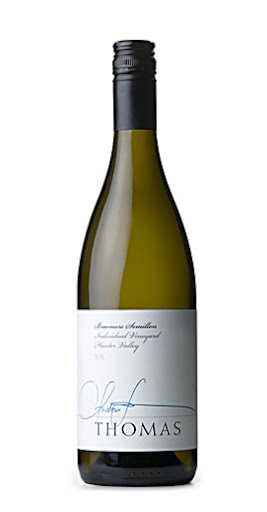
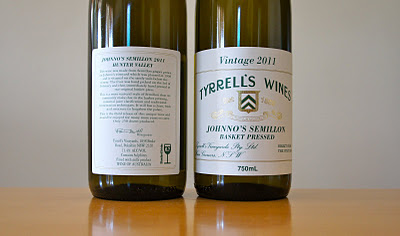
But the real question is “Which age Semillon goes best with what type of food?”  With sharp cheeses such as a Blue Cheese or a Gorgonzola (which my bride uses when making a prawn Risotto and is outstanding!) demands a newer and crisper, more acidic Semillon.  I personally would almost always rather drink an aged or Museum-released Semillon.  However, with a sharp cheese and when a bit of acid is required, you should try a younger Semillon.  I have found two younger Semillons that in my opinion stand out (the rest are just not that interesting yet).  They are the Andrew Thomas Braemore Semillon and the Tyrrell’s Johnno Semillon.

Andrew Thomas is one of finest wine makers in the Hunter Valley, if not one of the finest in the world.  And he is a really nice guy also!  I have had the pleasure of sitting next to him at a degustation affair with matching wines a few years back, and others have told me how pleasurable he was to meet and talk to when watching sport in a bar!  A great guy making great wine!

I have been surprised to to learn after buying some excellent Shiraz’ such as the 1998 Tyrrell’s Vat 9 Shiraz and the 2007 Pokolbin Estate Shiraz, that Andrew was the wine maker for both of those wines.  But that is a topic for another post.  Back to Semillon.

I have had the 2009 Braemore and it is brilliant.  Crisp, a touch of acid and a bit of lemon flavor.  Many young Semillons taste flat to me, but the 2009 Braemore is ripe with flavor.

The Tyrrells’ Johnno is the other young Semillon I enjoy.  I have had the 2010 and 2011 vintages and both are exceptional.  It is a bit more edgy and acidic than the Braemore in my opinion, even though Tyrrell’s positions it as a smoother type of Semillon.  However, it is a most enjoyable drink when you need to pick a Semillon right from the bottle shop.

I really start to enjoy my Semillons though when they have 5 or more years in the bottle.  They become less acidic (even thought many still have a lot of acid and a lot of life in them yet!) and more complex.  Both the Thomas Braemore and the Tyrrell’s Johnno Semillons are worth keeping in the bottle for a few years if you have the discipline and patience!

There are almost too many good Hunter Valley Semillons to mention here, but for me, the top class includes the Tyrrels Vat 1 (especially the 2005 vintage), The Meerea Park Alexander Munro and Meerea Park Teracotta Semillons (anywhere from the 2004 – 2006 vintages), The 2005 Brokenwood ILR (I was fortunate to pick up the last 9 bottles at the cellar door a little while back), the 2004 Lindemans Semillon and the 2004 Thomas Braemore.  I am sure I have left some great wines off this list, but I can attest the wines I mentioned within are truly outstanding medium-aged Semillons.

These “medium-aged” Semillons go really well with egg dishes.  I had about a third of a bottle of the 2004 Meerea Park Teracotta left over one Sunday morning and heated up some leftover quiche for a late breakfast at about 11 am and a glass of the Semillon to go with it.  I thought I had died and gone to heaven!  Since I rarely drink in the morning, my bride and I now look for reasons to make egg dishes (such as a Salmon Fritatta or Quiche Lorraine) so we have the excuse to drink a medium-aged Semillon with dinner!  I also like my medium-aged Semillons with Indian and Thai food.

As so often is the case when researching material for a post, I came across something already written which does a good job of describing what I wanted to say.  A review of the Semillon grape from Wine Knowledge is worth a read and entirely matches my view on Semillon.

I have not recommended any Semillons from regions other than the Hunter Valley.  There are certainly some great Semillons produced in Margaret River and the Barasso Valley, and certainly some magnificent Semillons produced in the Sauternes and Barsac regions in France, but my deeper knowledge and appreciation of Hunter Valley Semillons makes me favor the Semillons from that region over all others.  My only exception to that would be the great dessert wines made from Botrytis Semillon from Sauternes such as Chataeu D’Yquem.  (See my post on “Why I think Chauteau D’Yquem is the Best Wine in the World”, my most-viewed post of all time!)

White wine with beef? You bet!

“Never” you say!  White wine with fish and red wine with beef is the convention.  Let’s turn the table!

Recently, I wrote a blog on how well a good Pinot Noir goes with a dense gamy fish life swordfish.  This is a perfect example of a red wine matching well with fish.  Another great example is matching a big, buttery Chardonnay with beef stroganoff.  For a great recipe for beef stroganoff, see DAZ in the Kitchen, a wonderful blog on food written by my wife, Deanna Lang.

My wife’s beef stroganoff is very rich and creamy.  The mushrooms are cooked in butter and the gravy is very rich.  The richness and creaminess of the gravy, mushrooms and fettuccine noodles almost demand a similar style white wine like a big, buttery Chardonnay.  There are several choices for this including a decent aged Montrachet, an aged big, rich Hunter Valley Chardonnay such as the Alexander Munro Chardonnay from Meerea Park, or the aged Chardonnay from Waverly Estate, or a Chardonnay from Margaret River such as the Leeuwin Estate Art Series or one from Pierro.

But one of the classics is the Penfolds Yattarna, otherwise known as “White Grange.”  We had the 2006 vintage with the beef stroganoff.  This is such an easy drinking wine, we often wonder where it went.  Sometimes we think it must have evaporated!  My wife claims that the sign of a good wine is that it goes down so easy that she can not believe having drunk all of it when it is gone!

The point is “rich and creamy” gravy and “rich and creamy” white wine go very well together.  The gravy and noodles contributed more to the overall taste of the meal than the beef (mildly seasoned) did.

Therefore, while it is generally a good and safe rule to match “white wine with fish” and “red wine with beef”, you are missing out on a great combination if you are not willing to try to match the more subtle flavors and textures involved.  Next time you have a heavy, rich, creamy gravy made from mushrooms cooked in butter, try a big, rich Chardonnay.

BTW, never drink a Montrachet before its time – it is absolutely sinful – but then again, don’t wait too long or you will be pouring good money down the drain – literally!  But then if you are buying Montrachet, I expect you are careful about this and know what time frame in which to drink the wine.

Chianti perfect with pizza

The Chianti, a 2006 Gabbiano Classico Riserva was a perfect match for the pizza.  It was soft, but with enough complexity to mix beautifully with the various pizza flavors.

We were thinking of also trying a 2001 Rosemount Traditional, but after tasting the Chianti, realized that the Chianti was perfect and decided to save the Rosemount to go with corn beef.  (A separate blog on that will follow.)

As with all Italian Chiantis, the Gabbiano was made from the Sangiovese grape.  While Sangiovese is considered a secondary grape, it has real stature in Italy and is popular globally. There are a number of Australian makers of Sangiovese now and one of the very best is Tintilla, in the Hunter Valley.  The do a great Sangiovese and a Sangiovese / Merlot blend and some of the older vintages are nicely smoky and a bit rustic in tasting.

If you really want to have a good time, check out the Tintilla website and write them about their annual Sangiovese tasting.  I believe it just passed for this year, but there is always next year.

The Gabbiano comes in a Classico and a Classico Riserva, which is a better wine, using a more select collection of premium grapes.  The Riserva has a DOCG appellation in the Tuscany region which means it is ‘top of the line’ Sangiovese. If you like Chianti, but you are not aware of the different brands and which one is best, you can usually be safe in picking up a very good quality Chianti by choosing one with the “Rooster” label (picture to right) which ensures it is of DOCG quality (unless of course, it is a counterfeit.)

I was originally debating between a Shiraz and the Chianti, but decided the Chianti was a better choice and I was right.  Pizza crust goes better with Chianti than a Shiraz for starters.  Additionally, we had a pizza with salami, green capsicum, Spanish onion, mushrooms, garlic, chili and cheese.  The salami on its own would have fought a bit with the Shiraz, whereas it worked beautifully with the Chianti.  And it worked great with our guests, Ric and Cris, as Ric is Italian (Cris is Venezuelan) and the maker of the fine salami we used on the pizza.  Since having started to use Ric’s salami as a topping, it has been impossible to use other salamis or pepperoni.  Ric’s family made another 140 kilograms of salami today and we will be joining them in two weeks to help with the next batch.

My friend Jeff, who lives in California, suggested that a Red Zinfandel would also be a great match for pizza and he is correct.  I tend to forget about what a great wine Zinfandel is for many occasions, and pizza would be one of them.  We do not see much Zinfandel in Australia, but Cape Mentelle makes a great one.  I had a  2008 Cape Mentelle Zinfandel at Bistro Molines in the Hunter Valley several months ago and it was the first Zinfandel I had had in 15 years (since moving to Australia).  I also had a 2009 Cape Mentelle Zinfandel at The Cut Bar & Grill a little while ago with their slow cooked prime rib.  Cape Mentelle is in the Margaret River region which makes truly outstanding wines.  And if you are looking for the finest steak house in Sydney, you need look no further than The Cut Bar & Grill.  And the sommelier at the Cut, Gustavo Kroneis, is the finest around and has been outstanding at recommending great wines to go with our steaks.

It is easy to just break open a few beers when you are having pizza, but if you want to wine to go with pizza, try a Chianti or Red Zindfandel.

And BTW, here is a picture of one of the pizzas we made tonight.  Deanna will be posting a blog entry in DAZ in the Kitchen with the recipe if you want to try it.

What wine with Pizza?

This is always a tough question since there are so many different ingredients that can go into pizza.  We have gone from buying pizza to making our own, which is quite easy and allows us to create exactly the taste we want.  It also means we have a healthier pizza.  Some times we make the base and other times we buy it, but that choice has no effect on our choice of wine.

We alway use a tomato sauce / paste to cover the base, and almost always a spicier sausage such as pepperoni or the spicy home-made Italian sausage our great friend, Ric and his family make annually (so glad to have a private stash of that sausage – it is magnificent for a pizza topping!).  We also tend to put a lot of garlic and chili on our pizza.  Therefore, a Hunter Valley (spicy, pepper flavored) Shiraz is always a good choice.  However, something a little lighter such as a Cabernet Sauvignon or a Italian Chianti (made from the Sangiovese grape) is always a safe choice to bring out the flavors of the pizza.

Interestingly enough, some white wines will also go well with pizza, since a number of white wines match well with the various cheeses used.  And if you are using chicken, pineapple, or something similar for toppings, a white becomes even a better choice.  I would recommend a crisp (2 or 3 years in the bottle, before it smooths in taste and texture) Semillon to match up well with cheese, but overall believe a Gewürztraminer, or Riesling would be best.  If it is plainer tasting pizza, a Pinot Grigio would be good.  A Gewürztraminer works well with a lot of different spices such as with Indian food or Thai food, so it will work well with a well seasoned pizza also!

It is rare that I would recommend seven different types of grapes as being a good match for a food, but that says a lot about the diversity of pizza!  Then there is always Merlot, but I rarely drink Merlot if given almost any other choice.

And if this is all too difficult, then grab a beer or two!  But overall, it is usually a Shiraz or a Chianti for me.  The only question is – “which one”?

BTW, I am making the pizza tonight and Deanna, who writes the blog, DAZ in the Kitchen, will be creating a post soon with the pizza recipe we use.

Educating your wine palate and taste buds using potato chips

I have a number of friends who will drink any wine with any food and the combination does not seem to matter to them, but then many of them are drinking for the alcohol effect, not the taste.  Any many other friends know and can appreciate the basic and simple rule of ‘white wine with fish, red wine with meat’.  However, there are a number of nuances the make a food eating and wine drinking experience even more pleasurable.  There are certainly wide variances between the taste of different white grapes such as Chardonnay, Riesling, Sauvignon Blanc, and so on.  The same goes for various red grapes.

Wine tasters believe that the Sauvignon Blanc grape is the easiest to determine in a blind tasting and stands out as being the most different and distinguishable from other grapes.  And it is a classic to go with fish, making it a safe bet for most fish.  However, for a gamy, more solid fish such as swordfish, I find a good Pinot Noir is a perfect match, especially if the swordfish has a bit of light salsa or tomato sauce with it.  Therefore, people may look at what you are eating and drinking and believe you have made the ultimate wine / food matching mistake in pairing a red wine with fish, but I can assure you that this is a most pleasant pairing!

The sauce (and amount) and the method of cooking (broiled, roasted, BBQ, steamed, etc.) also has a big impact on what wine goes best with a particular food.  Even the difference between different styled wines from the same grape can make a huge difference.  And the aging of the wine changes the wine greatly over time, so it is important to select the wine close to the optimal time for drinking it.  You may find a white wine more acidic when young and more buttery and smooth when older.

While this may seem like a lot of effort to understand and rightly match food and wine, it really does make a great difference.  Even if you do not understand it, you will usually recognize it and notice the difference in how good the food and wine tasted (even if you cannot describe it).

However, what I really want to focus on today is much easier to appreciate.  A good first step to educating your palate is to just try different foods and taste them with your eyes closed and focus on what the flavor is telling you.  Try to pick out how dry or sweet the food is, is it acidic?, or bitter and so on.  This makes you more aware of the common taste characteristics of food.

Tonight I was a bit hungry, but it was a while until dinner, and my wife had an open bag of sour cream and chive potato chips.  I had just poured a glass of a Cabernet Sauvignon.  I grabbed a handful of the sour cream and chive potato chips, ate them and then took a sip of wine.  I thought the flavours would be competing against each other and it would be a horrible match, but it worked far better than I thought.

Then I poured a glass of a Sauvignon Blanc / Semillon blend (I had both bottles open from a day or two before) and tried it with the sour cream and chives potato chips also.  I would have expected this to be a better combination, but found out that was not the case as the Sauvignon Blanc / Semillon blend was a bit acidic, and did not work well with the sour cream taste.  Then I opened a few more bags of different potato chips and tried them with both wines.

Why do I suggest potato chips for this?  Because it is a lot cheaper to open a few bags of potato chips than it is to used real honey-glazed ham, chicken, etc.  Of course, you could always go the sliced meat route for another lesson.

By trying several different wines with several different flavors of potato chips, you can quickly educate your palate and zone in on grape and food flavor combinations you like and don’t like  I will not tell you my findings of the various combinations of grapes to potato chip flavors to let you focus better and really learn more by tasting than reading.  I would also suggest you do this in the company of friends and discuss your findings.  You will be amazed at how quickly you will learn to identify tastes and combinations that work or not.  And talking about it while doing the tasting is a great way to learn (and socialize!).

When doing this, I would suggest using Kettle or Red Rock brand potato chips as they tend to have more intense flavors than other brands, and also have a wide variety of flavors including sweet chili, peri peri chicken, caramelized onion, honey coated, etc.  These wide contrasts can help you quickly zone in on categories of combinations that work – or don’t!

Let me know what combinations of flavors and wine grapes work for you!  I am anxious to hear your feedback.

My first wine at HUX @ Nortons

We once again had a fabulous meal at HUX @ NortonsJay Huxley had recently returned from his trip to Las Vegas and was rearing to cook.  We had a special treat tonight of a blue-fin tuna belly starter and my wife and a friend had the Smooth Dory fish for mains while myself and the others had the Porterhouse Steak.  Usually it is just Deanna and me, and Deanna always gets a lemon, lime and bitters to drink and I always get a beer, either a Heineken or a James Boag’s Premium Lite.  However, since there were 5 of us tonight, we also got a bottle of wine – our first wine ever at HUX!

I was pleased to find they had a few decent bottles to choose from in addition to a decent selection by the glass.  For those of us having the steak, we narrowed the choice down to either a bottle of the 2006 Penfolds Bin 128 Shiraz or the 2008 Penfolds Bin 407 Cabernet Sauvignon.  Either would have been ‘ok’ with the Porterhouse, but Jay applies some nice seasoning and also makes a tremendous side of Potato Salad to go with the steak, so we opted for the Shiraz.  Since Jay’s food is so good, it demands a very decent to great bottle of wine.

I should have brought a pocket Vinturi along to do an immediate decant.  The wine needed a few minutes to breathe, but opened up after a bit.  Pouring it through the Vinturi would have made the wine more immediately accessible, but it was certainly drinkable enough and an enjoyable drop to have with the Porterhouse.

What did surprise me though was that there were about a dozen different wines available by the glass and a few decent choices of both reds and whites.  Plus they had a few premium bottles of reds with some age on them.  This impressed me.  I had usually just bought beer while eating at HUX, but will now consider wine by the glass or a bottle if there are a few of us who want wine.

And in a future column, I will be matching a Norton’s Hotel wine selection with each main on the HUX menu.  Stay tuned for that coming soon.

What wine to drink with olio spaghetti with garlic and prawns

One of my wife’s famous dishes is her olio spaghetti with garlic and prawns.  The dish is relatively easy to make, and outstanding as a starter or main.  Tonight we are having her Garlic Prawns with Spaghetti as a main with a side salad.

On its own, we would have considered drinking a Riesling, but felt a better match with the food was a 2010 Pierro  LTC.  For those of you who do not know of Pierro, it is a great winery in Margaret River.  They make a wonderful Chardonnay and a wonderful Sauvignon Blanc among other great wines.

The Pierro LTC (which interestingly enough stands for ‘Little Touch of Chardonnay’) is a 75% Sauvignon Blanc and 25% Semillon blend.  The Semillon adds some structure and lasting power to the Sauvignon Blanc, but this is still a wine you want to drink while it is fresh and not more than a couple of years old.  It is a good wine to go with all sorts of fish and seafood.  We will only drink half the bottle tonight and I will use the rest to go with the entree for lunch I plan to have this Thursday at Fish on the Rocks before getting into the 2009 Bouchard Pere & Fils Puligny Montrachet to go with either lobster or the Moreton Bay Bugs.

The real question of what wine goes best with this dish depends on how much garlic you put into it.  With less garlic (and the prawn being more prominent), the Peirro LTC is a great match.  However, tonight we put a lot of garlic into the dish – about 10 gloves for two servings!  We love our garlic, and loved the food tonight, but it ended up being a little over-powering for the wine.  Next time we put this much garlic into it, we will use a Riesling instead as it ‘compares to’ or balances the wine with the food better.

With less garlic, the Pierro LTC matches the dish best, but with more garlic, you need a more powerful wine and I think a Riesling would be a better choice.

Is wine better before, during, or after sex?

As intriguing as this posting sounds from the title, I could lead you through a lot of advertisements and other more boring things before I finally brought you to the answer, but I will provide it to you immediately – wine is best before sex.  It can be used during all three phases, but for most guys, if we only had wine during sex, we wouldn’t be drinking much at all, and if we were to drink during foreplay, there would not be time to get even one sip in for your typical male.  And seeing a woman drinking wine preparing for or participating in sex, is a very sexy thing indeed!

Why do I believe wine is best before sex?  First of all, I am passionate about wine and sipping a little bit of a nice wine, like lighting candles, makes me more interested and passionate about having sex.  And after sex, I am usually flushed with contentment (BTW, I am talking about sex with my wife – a loved one, not random sex, paid sex, group sex or anything like that.) and wine would be an overload.  Therefore, I never drink wine immediately after sex.  (Today I had an intervening nap and two hours before I got back to drinking wine!)

Wine can play an interesting role and use during sex.  First of all, lips soaked in wine from a recent sip can act as a perfume or another special taste co-mingled with your lovers other scents.  Additionally, sprinkling a bit of wine over your lover’s various body parts and lapping it up can be quite sensual.

One warning though about drinking wine before sex – have only a little to help the mood.  Too much and you may not be able to perform!  A little alcohol can act as a stimulant, but too much becomes a depressive.  And for you older guys, it is not a good idea to combine Viagra and wine as too much of either can give you heartburn.

And now the other key question – what wine goes best with sex?

Without question, that would have to be a bubbly, like Champagne.  And make sure to be generous and share some with your partner!  Otherwise, your selfish ways may turn her / him off.  Or some exotic or difficult to find wine.  The wine being special is a reflection of her / him being special.

As many of you know, I blog a lot about matching wine to food and I have also blogged about matching wine to chocolate.  And soon, I will do the same for cheese.  However, I do not have any useful ideas on matching wine to sex, except to repeat what I said above – bubbly or difficult to find wine for most sexual experiences!