About Steve Shipley

I am a wine enthusiast and writer without affiliation to commercial wine ventures or firms in the wine industry to ensure my opinions and points of view are strictly my own. I have enjoyed wine increasingly over the last 20 years and present many of my views and learning through this blog. My book, Wine Sense, consolidates what I have learned about enjoying wine and enhancing wine drinking experiences which I look forward to passing onto you.

What’s With Weird Wine Decanters?

I recently wrote a blog entitled “What’s in a Glass” which describes the aesthetic beauty and noticeable improvement in the wine drinking experience by using proper glassware.  I am certain for most of us who care even a little bit about improving our drinking experience, that the investment in good glassware is well worth it. 

However, I do not believe that applies to wine decanters.  There is, of course, real aesthetic value in using a decanter that borders on being a piece of art.  Reidel has a great selection of different and unique decanters to be able to choose from, and I was gifted a beautiful Reidel Black Tie Smile decanter for my last birthday which I use to distinguish that special bottle of red, different from all the other ‘more common’ wines for the evening.

The presence in this decanter says “I am a special wine!”  And I have seen some really over the top decanters which sell in the $4,000 range such as the Etienne Meneau Album Caraffe #5 available from
Top Australian Wines.  This decanter is certainly unique and a conversation starter, but not sure of the practicality of it for decanting – or pouring into a glass!

I know several people have bought these and I expect they are getting great joy from them.  However, I must question how useful they are for decanting when the air – wine interface is so limited.  The whole purpose of decanting is to oxidize the wine and bring it to completion for drinking.  Initially, removing the cork from a bottle will allow some pent up smells to evaporate, and unless it is a very old and fragile wine, further decanting continues to improve it slightly.

While decanting, I love to put some wine immediately into the proper glass and to test it every few minutes to see how quickly it changes during the initial decanting.  I find it interesting as to how for some wines, the change is noticeable and almost immediate, yet for others – for example the 1987 Lindemans Pyrus – the wine needs to sit for 6 – 8 hours or even longer before the process is complete.

The main purpose of decanting is to expose the maximum amount of wine to air for the agreeable amount of time to optimize the wine’s flavor and character.  And for this, I find the most traditional wine decanter shape does the job best.

This is the most sensible shape for a decanter, and this one is the Maxwell and Williams Diamante Decanter for $29.95.  I have found this on sale previously for $19.95 at Meyers.  I have about a dozen decanters which come in handy when you are having a larger dinner party with multiple wines, or doing a vertical tasting of multiple wines.  For such an evening, I am glad to have my set of decanters and to have only paid $20 for each one instead of $250 – $700, let alone $4,000!  Again, there are some great decanters out there and some have magnificent character and are aesthetically appealing.  Yet, unlike the glassware from which you are drinking the wine and where the shape of the glass makes a significant difference in taste, a $20 traditional decanter, used as an interim vessel for holding the wine while it mixes with air, is as good or better solution than more expensive decanters available.

I am not trying to steer you away from more expensive decanters, especially if you get joy from the embedded art and aesthetics.  I love using and get great pleasure from my Reidel Black Tie Smile decanter, but to get the job done as well as with any other decanter, you don’t need to spend more than $20.

(The decanting  process, what types of wines to decant, and the timings will be discussed more thoroughly in a future posting.) 

A Cloud with a Silver Lining!

The night before last I became sick with a viral infection in my lungs and yesterday it felt like I was ripping my lungs apart every time I coughed.  I have had the shivers and a small head cold also.  I finally went to the doctor this morning and got a script of antibiotics for the bacterial infection that was in my lungs (in addition to the viral infection).  Needless to say, I have been drained of energy, sleeping most of the time, and certainly have not had a desire to drink wine, nor the energy to write about it.

However, like most passions, I found I was really missing both (1) drinking wine, and (2) writing about it.  While I have had a number of topics about which I wanted to write, I just could not get focused enough to turn out a column.  Last weekend, I cranked out four blog postings of some size and complexity to have available for publication during the week.  This weekend’s efforts are limited to this one post.

But I found myself constantly thinking about wine, and was able to pull up memories of how different wines tasted.  And that is the silver lining in the cloud!  I realized that even if I am at the point health-wise where I do not have the physical ability to ever enjoy wine again, I will always have memories that I can draw upon to continue to savor the experience.  And a great part of enjoying wine, is not just the tasting but sharing the experience with others!

I recently found out from one of my MW (Master of Wine) friends that we start to lose our palate around the age of 65.  This greatly concerned me as I am 59 and have more wine than I can drink in the next six years!  However, he assured me that the loss of capabilities is minute and really of concern more so for wine judges and ‘super tasters.’  For example, James Halliday, the great Australian wine critic is in his mid-70s and still able to perform his avocation at the highest level.

I plan on drinking wine regularly for the next 20 – 30 years (God willing), and hope that my taste buds are up to the task.  However, if they are not, then I am still certain that I will enjoy the experience, but utilizing my memory more than my taste buds!  And it might be a real blessing as I may no longer be able to discern that small, but quite noticeable difference between the 1997 Château D’Yquem (at $300 per half bottle) and the 1998 Château D’Yquem (at $180 per half bottle)!

Another darn risotto and wine post?

Yes!  (But I promise this will be the last one for a while!)

My wife made a very pedestrian, yet delicious bean and bacon risotto the other evening (if you follow the link to her post, you can get the recipe).  We were a bit skeptical about how it would work, but it turned out divine.  Yet, when you pick up a little fat and extra juice from the bacon, you wonder “is there any wine that will go with that?”

The wine needed to be nice, but not overpowering, and this was a situation where many of the wines I would otherwise choose, would fit in that category – they would have dominating and minimized the risotto.  I needed to open a red wine to be used in the cooking process, and figured that the wine I choose would have to work for that (pretty much most wines – even ones well past there peak do!) and for serving with the risotto.

The 2006 Gabbiano Riserva was a great match and the blending of the food and wine were perfectly balanced.   

Wine Texture is a big part of of how I perceive how good a wine is, especially when served with food. 

A wine can range from tepid (usually a very old wine or a poorly made wine in the first place with poor grape selection) to smooth (like some beautifully aged Pinot Noirs or Cabernet Savignons) to having a bit of friction on your cheeks (usually from the tannins in a wine built to last a long time, but where the tannins are not completely integrated yet), to gritty (where the tannins are big and far from integrated).  A good example of a superb, yet ‘gritty’ wine was the 2006 Seppelts we had with lasagna.  Both the food and wine were gritty and matched beautifully.  I needed to accomplish the same with matching a wine to the bean and bacon risotto.

I needed a wine for the bean and bacon risotto which was smooth, yet still possessed some character and fruitiness, and would still compliment the bit of fat and extra juice.  The 2006 Gabbiano Riserva was a perfect match.  Like Goldilock’s, “not too big and not two small, but just right!”

1988 Lindeman’s Verdelhao – one of the best white wines I have ever drunk

“Yes”, that’s correct – Lindemans’ spelled “Verdelhao”  that way back in 1988.  Most Verdelhos will not last more than several years in the cellar.  But somehow we got our hands on two bottles of this great wine back in 2006, and had one in 2008 which I remember as being superb.  This Verdelho was definitely built to last!

Our friends, Owen and Lucie, recently got engaged and we have been looking for a time to have a great meal together, which is far too infrequently, and our next meeting for dinner was scheduled for 1 September!  But a class they were scheduled for over the weekend was canceled and we happen to be free which provided the opportunity to get together this last weekend, and we jumped at it.

They wanted to treat us to a meal at their house because we had recently given them a bread maker we were no longer using.  Owen and Lucie are really nice people, great cooks and have a great palate for good wine.  Therefore, it is always a pleasure to share a meal and wine with them and I put ‘extra’ effort into selecting wines we can drink together.

Owen really wanted to provide the wines that evening and we were going to just bring a bottle of the 1998 Pommeray Louise Champagne as a celebration of their recent engagement.  This is one of the world’s best Champagnes and the celebration was worthy of such a fine wine.  And I was glad to have an easy time of it, by selecting a great wine to match the celebration, not the meal – that would be Owen’s job that night!

However, Owen called me in the afternoon, and informed me that we would be having a very slightly seared tuna steak with guacamole and chili (which could be added in for taste) followed by a fried lightly battered flathead fish.  He had some great reds picked out (which I will describe in another post as to how well they went with the tuna and flathead!), but wanted to start with a white for the cheese platter before the meal, and have an option of a white with the fish if we so wanted that choice instead of the reds.

I had to put on my thinking hat and see what I could come up with.  It would have been very easy to pick out a good Sauvignon Blanc or Semillon / Sauvignon Blanc blend, but there is nothing special in either of those choices.

Fortunately, I came across my last bottle of the 1988 Lindemans Hunter Valley Verdelhao.  I knew this would be a magnificent treat regardless of what food we matched it up with, assuming the bottle was still good.  I had been keeping it stored for the last four years between 2 – 6 degrees Celsius and ready for drink instead of the normal 14 degree Celsius of my cellar.  I believe this helped ‘save’ the wine as it maturation process would have slowed to a trickle.  Also, knowing the cork was almost 25 years old, I found a back-up bottle (1999 Moss Wood Semillon) if needed, and brought along my Ah So cork screw.  The Ah So cork screw is about the only way to get old cork out of an old bottle.  It is designed to be able to get old and soggy corks out of the bottle, but you still need to be careful and use only a small amount of pressure when putting the Ah So around the cork.  I have had several incidents where the cork has been pushed into the bottle when not careful.

As delicate as I tried to be, the cork broke half-way through.  Fortunately the cork did not appear compromised, just weak and soggy.  Then I had the issue of not being able to secure the bottom half of the cork without pushing it into the bottle.  It was not my intent to filter or aerate the wine since the structure of a 25-year-old wine is fragile at best.  However, at this point, we decided to do that with a slightly larger mesh which was able to remove any cork from the wine without causing too much damage to the little remaining structure.  To stop the cork in the bottle from catching in the neck and slowing or stopping the flow of the wine when pouring, I used a chopstick to hold the cork away from the neck, a method that works really well if you ever find yourself in that situation.

I was certainly excited to find when pouring the wine into the decanter that it had a rich, golden hue to it, without any indication of a brownish or other “off” color which means the wine is past its best drinking period.  And once I brought the decanter to my nose, I knew we had struck “liquid gold!”

Starting off the evening with this bottle of wine set the stage for everything that followed – it was a magnificent evening and meal overall.  The wine was huge and robust with great flavors of mandarin and tangerine, and a texture which seemed to float over the tongue.  Just holding the wine in my mouth was a thrill, experiencing everything the wine had to offer.

I have drunk a lot of wine in my time, but this would have to be in my Top 3 white wines ever along with the 1971 Chateau D’Yquem and the 1991 Lindemans Sauvignon Blanc.

My Top 3 viewed wine posts and how social media shaped their success

There are three blog posts which have generated almost double the views of my other 40 or so posts.  These being:

Surprisingly, the post on Wyndham Estate Wine and Chocolate Masterclass is the oldest post of the three, but still generating regular viewing.  This may be because it is linked to and visible from the Wyndham Estate Facebook page.

Wyndham Estate

The Why I think Château D’Yquem is the best wine in the world post was far in the lead until recently.  And the post on What’s in a glass? seems to have the most lasting educational value and has been shared around more than other posts.

Each post is currently within two views of each other.  It is interesting to see how and when people view different posts and try to understand “why?”.  I was surprised to find out that almost half of the more recent views being directed to SAZ in the Cellar come from the “Stumble Upon” website, more so than from Network Blogs, Facebook, LinkedIn or Twitter.

There are a lot of fascinating principles underpinning the success of social media and I am just starting to figure out some of them and also to be surprised by and learn from others!

The perfect wine with Lasagne

A few weeks ago, my bride made lasagne for the first time and it was brilliant!  Usually, I don’t post pictures of her food as the link will take you to the photo, but I needed to this time as it was just brilliant!  Every time I look at it, I get hungry!

I mean, “how good is that?”  Of course, I still needed to decide what wine to drink with it.  A safe choice would have been Chianti, the light Italian wine made from the Sangiovese grape.  Another easy, choice could have been a Cabernet Sauvignon.  But I had a concern that with the richness I knew my bride was putting into the bechamel sauce in particular, that a Chianti or Cabernet Sauvignon might be a bland choice and not stand up to the lasagne.  The lasagne was going to be heavy, meaty, spicy and deserving of a big wine to match, but not so big a wine as to overpower it.

I thought a Shiraz might be a decent, yet not perfect match, but a bold and potentially good choice.  Shiraz is often highly influenced by it’s terroir, and I love some of the great Victorian Shiraz’ for that reason.  However, I was concerned that a refined, delicate Shiraz would not be sufficient, and that some of the more robust aged Shiraz’ could be overpowering.

When I started to think about the lasagne and reviewed my bride’s recipe, I knew the lasagne was going to be very flavorful, have a lot of different tastes blended together with a bit of hot spice (we add chili to almost everything!), and have some crispiness in the baked pasta slices to give it a munchie and grittier texture to it.  But this would be interlaced with layers of a rich bechamel sauce also.  Therefore, I did not want a wine that was overly complex and mature, or one that was too elegant.  I needed a wine I could chew on!  One with lots of big tannins – but not completely integrated yet.  A wine that had great flavor with both fruity and spicy tastes.

As I thought through my cellar (yes, I am sufficiently aware of the contents and placement to be able to do that in my mind!), I eliminated wine after wine, and then settled onto the 2006 Seppelt’s St Peters Shiraz.  Year-in, year-out, this is an amazing Shiraz, but the 2006 was particularly good.  The first time I tried it was at the end of ten days of heavy wine tasting and frankly my palate was destroyed.  I think I had the tannins of the last several days affixed to the inside of my cheeks and could not pick up on how beautiful a wine this was.  My lovely bride though insisted we buy some, but I only got six bottles.  However, a couple of months later and with a restored and workable palate, I tasted it again and realized what a truly unique and wonderful wine this was.  And as Treasury Wine Estates was trying to rationalize their inventory, I was able to pick up another 18 bottles at a really good price!

When eating the lasagne and drinking the wine, they provided a perfect combination in my mouth.  As I state at the end of my blog on “Wine with Risotto”, a perfect match of food and wine is when both are fighting for primary attention, but neither wins.  And that is what we achieved with my bride’s lasagna and the 2006 Seppelt’s St Peter Shiraz.

I am so lucky to have a wife who loves to cook and provides me both the pleasure of her cooking and the pleasure of choosing wines to match.  Thank you and love you hon (and you too Seppelt)!

Selling Wine – it’s a tough market but still possible!

I have accumulated far too much wine over the last decade.  The pleasure of ‘securing’ some amount of great wine was alluring and I felt it difficult to pass on really good deals.  Especially after having been denied access to good wines, good choice, and good value when living in Qatar, I came back to Australia very excited (probably too excited!) and was presented with a plethora of great choices.

About six months ago, I had finally inventoried all of my wine and realized I had way, way too much!  I looked at several options for selling wine.  I looked at Langton’s as a method of selling off a lot of wine, but did not like their service or attitude, and especially did not like the prices and low clearance rates they were getting.  One reason for the lack of sales I believe is they charge exorbitant fees to both the seller and buyer!  While they have previously represented a premier brand for buying and selling wines in an appreciating market, I am not sure their model is all that successful in today’s marketplace.

We keep a cellar (two actually and it is expensive which is why I want to sell off a lot to get back into one cellar) at Wine-Ark.  I love the service there, meeting other wine collectors and the attitude and service from the local staff in Chatswood, NSW where we store our wine.  We put 60 bottles up on their Wine Exchange though and in six months, have had only one sale of four bottles!  Things just aren’t moving.

I then decided to take things into my own hands and did an email distribution and put up some posters advertising wine for sale.  Through this process, I sold off about 500 bottles, plus about 5 bottles of the 150 year old Grand Mariner.  This worked quite well, and I got decent prices (considering the market), but only addressed a limited potential following.

However, through the benefits of social media, over the last year, I have developed a good relationship with Mark Wickman, another real fan of wine and owner of Wickman’s Fine Wine Auctions.  (This is a link to Wickman’s FaceBook page.  His website where all the action occurs is Wickman’s Fine Wine Auction website.)  I have been monitoring Mark’s monthly auctions and have been impressed by the manner in which it is conducted, and especially his clearance rates.  There are several reasons I believe Mark does so well, one being that he charges far less commission on selling his wine than other wine auction houses, and another is that he is a really helpful and nice guy.  He is always willing to take the time to share his knowledge about wine.  Mark also now has a YouTube channel WickWineAuction where he shares a lot of his wine knowledge.

Mark is also realistic about establishing the right price point for the wine and ensuring that both the buyer and seller are happy with the transaction.  It is a terrible market for selling wine these days.  Most of us have too much debt, the global financial crisis continues to take a bit bite out of everyone, massive job lay-offs in investment banking and other industries have far too many people ‘dumping’ wine to turn what they can into cash.  It is important if you want to sell off some of your wine, you need to be realistic regarding the price you can get for it.  However, Langton’s and others have not seemed to adjusted for this and their customers are suffering for it.

I have been researching different channels to sell my wine and am now sending a palette of wine to Mark to auction off for me over the next couple of months.  I have been monitoring his results and also have checked him out in the industry and found he is both a very likable and high integrity individual.  He also goes to extremes to ensure the provenance of his wine which is really important.  I bought three bottles of the 1992 Grant Burge Mesach from another wine auction house only to find the bottles were not stored properly and hardly worth what I paid for them.

If you are buying or selling wine, check out Wickman’s Fine Wine Auctions!  I have looked at and used a number of channels for selling wine and believe Wickman’s is the best!  Possible ways of selling off wine include:

  • Using Wickman’s Fine Wine Auctions
  • Using another wine auction such as Langton’s
  • Use Wine-Ark Wine Exchange
  • Selling though want ads, listings, etc.
  • Trading wine or bartering other goods

It is a tough market to move wine, but Wickman’s I believe is one of the best ways to do so.

[Note:  Like all of my recommendations and criticisms of people and products in the wine industry, I have no commercial relationship to any of them, including Wickman’s.  I am just sharing my experiences and likes / dislikes with others who may be interested.]

Wine with Risotto

One of the things I love about risottos is that (like curries) there are so many different ways to make and flavor risotto.  My wife also has a method for making risotto now using the Thermomix, that produces a great risotto in 20 minutes instead of the hour it was taking before, using more traditional methods.

While this is not a blog on making risotto, I am going to take a minute to cover off making risotto the traditional way versus using the Thermomix as I did not believe risotto made in a Thermomix could be nearly as good, but it is.  It did take her several trials to get it right in terms of exact timing and amount of ingredients to put in and some risottos work better in the Thermomix than others.  However, for the working couple who does not have the time upon returning home from work later in the evening, using the Thermomix to prepare a mid-week risotto meal is a real treat!

You can look to my bride’s blog “DAZ in the Kitchen” to find out more on her risotto recipes and making them the traditional way and with the Thermomix.  Now back to the question of “which wine goes best with which risotto?”

One of the basic principles I try to follow when selecting a wine to go with food is to ensure that the wine and food are “in balance.”

What does this mean?  For me, it means that neither the food nor the wine overpowers the other nor minimizes the other’s role in the meal.  If food is smooth or creamy, then the wine (usually) should be also; if the food is more gritty (like lasagna), then the wine should be more gritty (have more tannins, be unfiltered, etc.) like the 2006 St Peter’s Shiraz I recently had with a good meat lasagna;  if the food is complex with many ingredients, the wine should be complex (usually this means more time in the bottle); if the wine has some sharp tastes (sometimes with fish or seafood for example), then the wine should have a bit of an edge to it also.  There are entire books written on this subject, but hopefully you get the idea.

Risotto becomes creamier in texture as it is cooked and creates a bit of sauce to go with it.  We often make a chicken and mushroom risotto using white chicken meat and button mushrooms.  I have found that a medium-bodied Chardonnay goes well with it.  I would recommend something like the 2009 or 2011 Two Rivers Reserve Chardonnay.  While there are certainly many different Chardonnays in this category that would work, the Two Rivers is simply one of the very best Chardonnays you can get for the money.  I would recommend it over all others for this type of risotto.

But if the risotto is made with a combination of white and dark chicken meat or dark meat only and you are using multiple types of mushrooms, such as portabella and shiitake, or you are mixing in a bit of truffle oil, then I would use a more aged and complex Chardonnay.  Chardonnays in this league would include the Penfold’s Yattarna, the 2000 Waverly Estate Chardonnay, or even a Puligny or Chassagne Montrachet.  But note these wines are three to ten time more expensive than the Two Rivers, which would still go very nicely with a more complex chicken and mushroom risotto!

Last night I tried the 2009 Pepper Tree Pinot Gris with the chicken and mushroom risotto and it did not match as well as the Chardonnays I have had with the dish previously, but I believe it was the particular Pinot Gris.  I think a true Italian Pinot Gris such as the 2010 Jermann (which is a far better Pinot Grigio on its own!) would have matched beautifully as it is a bit smoother, yet much more intense and flavorful than the Pepper Tree.

However, the Pepper Tree, being a bit more bland and metallic, would have gone very nicely with a (non-spicy) pumpkin risotto, which is something I plan to verify the next time we make a pumpkin risotto.

My bride also makes a magnificent prawn and gorgonzola cheese risotto, with both the prawn and cheese bringing out a more metallic and sharper taste than the chicken and mushroom risotto.  Therefore, I match up a nice Riesling with that risotto.  I would recommend the 2009 Hugel Alsace Riesling or any good Riesling from the Clare or Eden Valley in South Australia.  There are so many good Rieslings in the $15 – $30 range that would go well with the prawn and gorgonzola risotto.

The important thing again is “balance”.  Had I matched the Riesling with the chicken and mushroom risotto, the Riesling would have overwhelmed the risotto and had I matched the Chardonnay with the prawn and gorgonzola risotta, the wine would have been overpowered by the food.

When eating and drinking wine, if either the food or wine is dominant, then you have made a poor choice in the matching, but if both are in balance and blending nicely together, then you have made good choice.  And if they are competing back and forth without either one winning, then you have made the perfect choice!

The Many Faces of Semillon – Part 2: Museum-Released and Aged Semillons

In my post entitled Overview of Australia’s Wine Regions – Part 3 where I described the Characteristics and Grapes of Australia’s Larger Wine Regions, I extol the unique and symbiotic relationship between The Hunter Valley and the Semillon grape.
 
Hunter Semillons are un-paralled anywhere in the world.  A multitude of Hunter wineries make great, great Semillons, in three styles which really relate to their age in the bottle and when they are released.  They are:

  • Crisp, new Semillons a year or two in the bottle
  • Semillons stored for 5 years before being released
  • “Museum” Semillons being bottled and stored 10 years before being released 

The discussion of young and medium-aged Semillons is covered in the previous post “The Many Faces of Semillon:  Part 1 – Young and Medium-Aged Semillons”.  In Part 2, we will now discuss the beauty of Museum-Released and Aged Semillons.

While I like my young and medium-aged Semillons, “museum-released” and aged (10 years or older) Semillons are in a class by themselves.  The older Semillons can still have a bit of acid, but have soften considerably, and developed a complexity and balance of tastes which is ethereal in experience.  The golden color, followed by nosing such a wine (I actually use Riedel Montrachet glasses instead of the Riedel Semillon / Riesling glassware for my truly aged Semillons.  See recent post on “What’s in a Glass?”) and flavors in your mouth provide one of life’s most precious pleasures!

I find an aged Semillon is best matched by scallops, either fried in butter, or made into a scallop boudin.  The food needs to have some richness to balance the richness of the aged Semillon.

My favorite three Museum Semillons are the 1999 Tyrrell’s Vat 1, the 1999 Meerea Park Alexander Munro, but top of the list is the 1990 Waverley Estate Semillon, their second vintage.  Unfortunately, there is no more to be found and I have only two bottles of the 1990 Waverley Estate left in my cellar.  However, the 1992 and 1996 Waverly Estate Semillons are magnificent also, and the 1998 and 2000 vintages are coming into their own.

I have done a tasting of the 1999 Tyrrell’s Vat 1, the 1999 Meerea Park Alexander Munro, and the 1999 Waverley Estate Semillons and it was difficult to pick a winner.  Each was truly outstanding in its own right.

A 10 – 20 year old Semillon can be truly magnificent.  The only problem is that there is some variability in the taste caused by difference in cork.  I had to pour a 1994 Waverley Estate down the drain because of a poor cork.  They have been good and always replaced a bad bottle for me, but is can still be a disappointment when you have had one great bottle and open a second one of the same vintage to find a small and discernible difference.  That is why I am a fan of moving from cork to screw-top.

As so often is the case when researching material for a post, I came across something already written which does a good job of describing what I wanted to say.  A review of the Semillon grape from Wine Knowledge is worth a read and entirely matches my view on Semillon.

I have not recommended any Semillons from regions other than the Hunter Valley.  There are certainly some great Semillons produced in Margaret River and the Barasso Valley, and certainly some magnificent Semillons produced in the Sauternes and Barsac regions in France, but my deeper knowledge and appreciation of Hunter Valley Semillons makes me favor the Semillons from that region over all others.  My only exception to that would be the great dessert wines made from Botrytis Semillon from Sauternes such as Chataeu D’Yquem.  (See my post on “Why I think Chauteau D’Yquem is the Best Wine in the World”, my most-viewed post of all time!)

The Many Faces of Semillon – Part 1: Young and Medium-Aged Semillons

In my post entitled Overview of Australia’s Wine Regions – Part 3 where I described the Characteristics and Grapes of Australia’s Larger Wine Regions, I extol the unique and symbiotic relationship between The Hunter Valley and the Semillon grape.
 
Hunter Semillons are un-paralled anywhere in the world.  A multitude of Hunter wineries make great, great Semillons, in three styles which really relate to their age in the bottle and when they are released.  They are:

  • Crisp, new Semillons a year or two in the bottle
  • Semillons stored for 5 years before being released
  • “Museum” Semillons being bottled and stored 10 years before being released 

Because of the many different faces and tastes of Semillon, it has a multitude of uses.  It can be enjoyed on its own, with cheese and crackers, with Indian or Thai food, with eggs such as when serving an omelet or fritatta (one of the reasons I think of Semillon as the ultimate breakfast wine!), a Tandoori chicken pizza, or many other foods.  I also find when you need that 100 ml of white wine for cooking that Semillon fuses beautifully and enhances, but does not overpower the food with which it is blended.  My bride has a number of recipes in her great blog DAZ in the Kitchen where wine is required to cook the perfect meal.

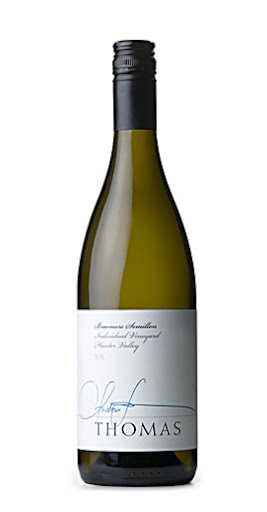
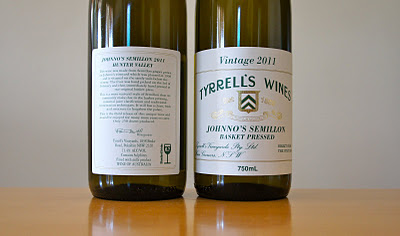
But the real question is “Which age Semillon goes best with what type of food?”  With sharp cheeses such as a Blue Cheese or a Gorgonzola (which my bride uses when making a prawn Risotto and is outstanding!) demands a newer and crisper, more acidic Semillon.  I personally would almost always rather drink an aged or Museum-released Semillon.  However, with a sharp cheese and when a bit of acid is required, you should try a younger Semillon.  I have found two younger Semillons that in my opinion stand out (the rest are just not that interesting yet).  They are the Andrew Thomas Braemore Semillon and the Tyrrell’s Johnno Semillon.

Andrew Thomas is one of finest wine makers in the Hunter Valley, if not one of the finest in the world.  And he is a really nice guy also!  I have had the pleasure of sitting next to him at a degustation affair with matching wines a few years back, and others have told me how pleasurable he was to meet and talk to when watching sport in a bar!  A great guy making great wine!

I have been surprised to to learn after buying some excellent Shiraz’ such as the 1998 Tyrrell’s Vat 9 Shiraz and the 2007 Pokolbin Estate Shiraz, that Andrew was the wine maker for both of those wines.  But that is a topic for another post.  Back to Semillon.

I have had the 2009 Braemore and it is brilliant.  Crisp, a touch of acid and a bit of lemon flavor.  Many young Semillons taste flat to me, but the 2009 Braemore is ripe with flavor.

The Tyrrells’ Johnno is the other young Semillon I enjoy.  I have had the 2010 and 2011 vintages and both are exceptional.  It is a bit more edgy and acidic than the Braemore in my opinion, even though Tyrrell’s positions it as a smoother type of Semillon.  However, it is a most enjoyable drink when you need to pick a Semillon right from the bottle shop.

I really start to enjoy my Semillons though when they have 5 or more years in the bottle.  They become less acidic (even thought many still have a lot of acid and a lot of life in them yet!) and more complex.  Both the Thomas Braemore and the Tyrrell’s Johnno Semillons are worth keeping in the bottle for a few years if you have the discipline and patience!

There are almost too many good Hunter Valley Semillons to mention here, but for me, the top class includes the Tyrrels Vat 1 (especially the 2005 vintage), The Meerea Park Alexander Munro and Meerea Park Teracotta Semillons (anywhere from the 2004 – 2006 vintages), The 2005 Brokenwood ILR (I was fortunate to pick up the last 9 bottles at the cellar door a little while back), the 2004 Lindemans Semillon and the 2004 Thomas Braemore.  I am sure I have left some great wines off this list, but I can attest the wines I mentioned within are truly outstanding medium-aged Semillons.

These “medium-aged” Semillons go really well with egg dishes.  I had about a third of a bottle of the 2004 Meerea Park Teracotta left over one Sunday morning and heated up some leftover quiche for a late breakfast at about 11 am and a glass of the Semillon to go with it.  I thought I had died and gone to heaven!  Since I rarely drink in the morning, my bride and I now look for reasons to make egg dishes (such as a Salmon Fritatta or Quiche Lorraine) so we have the excuse to drink a medium-aged Semillon with dinner!  I also like my medium-aged Semillons with Indian and Thai food.

As so often is the case when researching material for a post, I came across something already written which does a good job of describing what I wanted to say.  A review of the Semillon grape from Wine Knowledge is worth a read and entirely matches my view on Semillon.

I have not recommended any Semillons from regions other than the Hunter Valley.  There are certainly some great Semillons produced in Margaret River and the Barasso Valley, and certainly some magnificent Semillons produced in the Sauternes and Barsac regions in France, but my deeper knowledge and appreciation of Hunter Valley Semillons makes me favor the Semillons from that region over all others.  My only exception to that would be the great dessert wines made from Botrytis Semillon from Sauternes such as Chataeu D’Yquem.  (See my post on “Why I think Chauteau D’Yquem is the Best Wine in the World”, my most-viewed post of all time!)